It's 2am. The house is finally quiet. Everyone else is asleep - or at least, they're not calling for you right now. You sit down, maybe with a cup of tea that's already gone cold, and you open your phone. And you type something into Google that you've been too tired to type until now.
Because the truth is, you don't even know exactly what you're looking for. You just know that this - whatever this is - is harder than anyone told you it would be. Harder than you thought you could handle. And some nights, you're not sure you can keep going at the same pace without something in you breaking.
If that's where you are tonight, this article is for you. Not for the version of you who has it together. For the one sitting in the quiet, trying to figure out how to keep doing what you're already doing.
What Nobody Says Out Loud
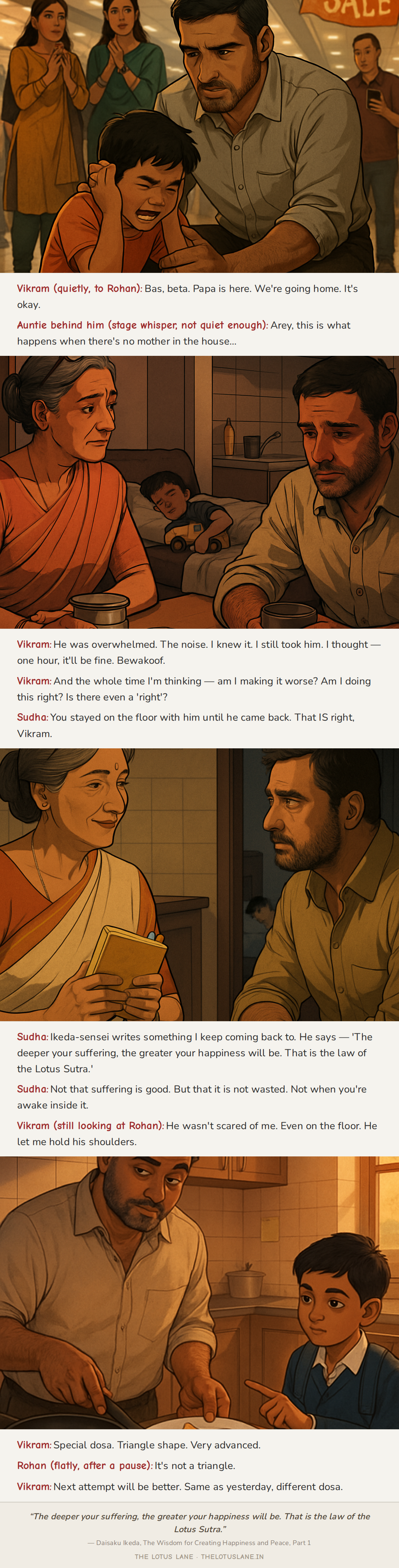
Caring for someone who cannot fully care for themselves - an aging parent who no longer recognizes you, a child with complex needs, a partner whose illness has slowly changed every plan you ever made together - is one of the most demanding things a human being can do. And it is almost completely invisible to the outside world.
People say things like "you're such a good person" or "I don't know how you do it." And you smile, because what else do you do? But inside, you're thinking: I don't know how I do it either. And I'm not sure I'm doing it well.
Here's what tends to go unsaid: caregiving is not just physically exhausting. It hollows you out in ways that are harder to name. There's the grief of watching someone you love diminish. There's the guilt that arrives every time you feel frustrated, or resentful, or just desperately bored. There's the loneliness of being surrounded by need while your own needs go unnoticed - sometimes even by yourself.
You are not a bad person for feeling any of this. You are a person under sustained, serious pressure. There is a difference.
The Guilt That Lives in the Middle of the Night
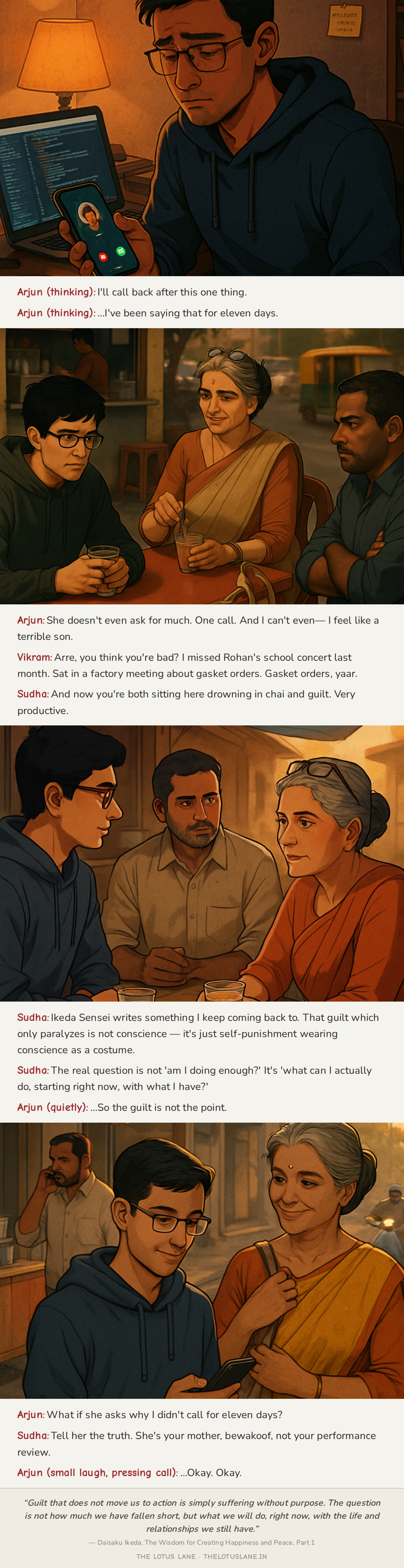
A lot of caregivers carry guilt like a second job. Guilt for not doing enough. Guilt for doing so much that there's nothing left for anyone else. Guilt for wanting an afternoon to yourself. Guilt for occasionally wishing things were different.
But guilt, when it becomes a permanent companion, stops being useful. It starts being a way you punish yourself for being human. And you cannot pour from an empty cup - yes, that's a cliche, but it's a cliche because it's true and people keep ignoring it.
Here is something that might be worth sitting with: the fact that you feel guilt at all is evidence that you care deeply. People who don't care don't lie awake wondering if they're doing enough. The guilt is not proof of failure. It might actually be proof of love, twisted into a shape that's hurting you.
What the Hard Seasons Actually Mean
There's a letter written in 13th-century Japan that has survived for over seven hundred years, and in it, the writer says something that sounds almost too simple - but lands differently when you're in the middle of a very dark winter:
"Winter always turns to spring. Never, from ancient times on, has anyone heard or seen of winter turning back to autumn."
That's not a promise that things get easy. It's not telling you to cheer up or look on the bright side. It's saying something more specific: that the direction of time is always forward. That seasons do not go backwards. That whatever this period is - however heavy, however long - it has a direction. It moves.
When you're in the hardest stretch of caregiving, that can feel impossible to believe. But the letter was written to someone who was suffering. It wasn't written as inspiration - it was written as honest comfort. There's a difference.
Practical Things That Actually Help
Philosophy matters. But so does Tuesday afternoon. So here are some things that actually help caregivers - not in theory, but in practice:
Name what you're actually dealing with. "Caring for my mother" is not specific enough to help you. "Caring for my mother, who has dementia, who wakes at 3am, who no longer knows my name, while also working part-time and raising two kids" - that is specific. Naming the full weight of something is the first step to figuring out where to set some of it down.
Find one thing that is just yours. Not productive. Not helpful to anyone else. Just yours. A walk around the block. A terrible reality show. A chapter of a novel before bed. This is not selfish - it is basic maintenance of the person who is doing all the caring. If that person collapses, the whole system collapses.
Ask for specific help, not general help. When people say "let me know if you need anything," they usually mean it. The problem is that "anything" is impossible to answer when you're overwhelmed. Try instead: "Could you sit with my dad for two hours on Saturday?" or "Could you pick up groceries once a week?" Specific requests get specific responses.
Look into what support exists. Many countries have respite care programs, caregiver allowances, home health aides, and community support systems that go completely unused because caregivers are too exhausted to research them. If you can find twenty minutes, a search for "caregiver support [your city or country]" might turn up something real. You don't have to do this alone just because you've been doing it alone.
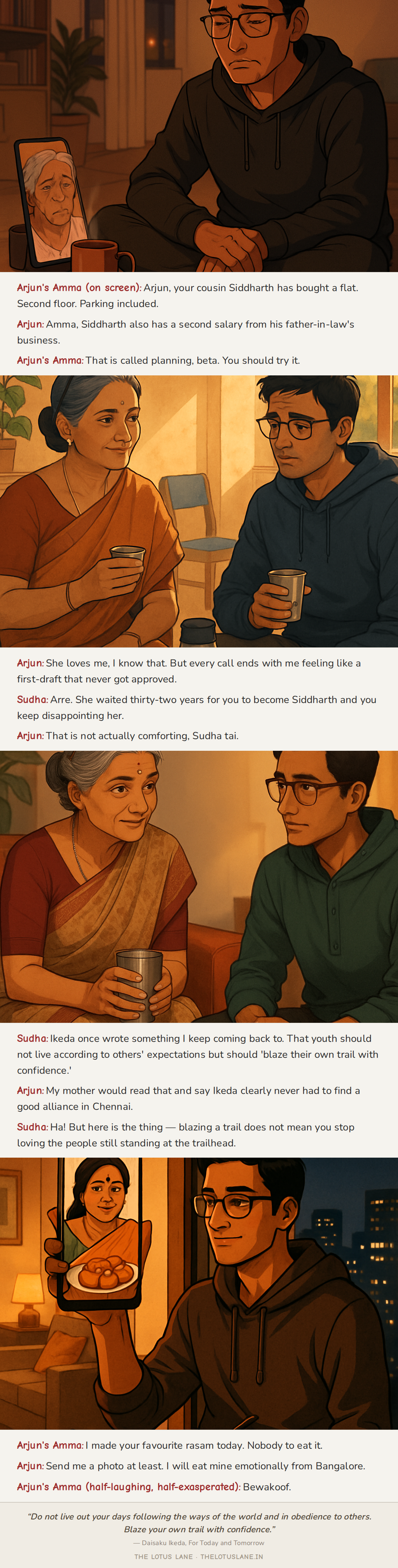
Talk to someone who isn't inside the situation. A friend, a counselor, a caregiver support group - even an online forum at midnight. Being witnessed matters. Being heard by someone who isn't depending on you matters. It doesn't fix anything, but it makes the weight slightly more bearable.
On Hope - Which Is Not the Same as Optimism
People sometimes confuse hope with positivity, or with believing everything will turn out fine. But that's not what hope is.
A philosopher who spent his life thinking about human suffering and resilience put it this way: "As long as we have hope, we have direction, the energy to move, and the map to move by."
Notice what that actually says. It doesn't say hope makes things better. It says hope gives you direction. Energy. A map. Those are practical things. Those are the things that get you through tomorrow, and then the day after that.
And the same writer said something else, equally worth sitting with: "Hope is not a matter of ability; it is a matter of decision."
Which means hope isn't something that happens to you when circumstances improve. It's something you choose - not blindly, not by pretending things are fine, but by deciding to keep your eyes on what is still possible. That's a hard decision to make at 2am. But it is a decision. And that means it's available to you, even now.
You Are Not the Last Line of Defense
One of the most damaging beliefs caregivers carry is that if they stop, everything falls apart. That no one else can do this. That asking for help is the same as giving up.
But here's the thing: you became the primary caregiver, most likely, through a combination of circumstance, love, and the fact that you were willing when others weren't. That is something. But it does not mean you are the only solution. It means you were the first one to show up.
You are allowed to let others show up too. You are allowed to let things be imperfect when someone else takes over for a few hours. You are allowed to not be available every moment. Not because you've earned a break through sufficient suffering - but because you are a person, not a system.
One Last Thing
You typed something into a search engine at 2am because you're struggling. That's not weakness. That's a person who is still looking for a way forward, even when they're exhausted. That matters.
You are not invisible, even if it feels that way. The work you are doing - the quiet, daily, unglamorous work of keeping another human being safe and cared for - is real work. It counts. And so do you.
The cold tea can wait. Get some sleep if you can. Tomorrow is still coming - and winter, as promised, does eventually turn.