You know that feeling when the alarm goes off and your body just... refuses? Not tired exactly. Not sick exactly. Just heavy. Like someone filled your bones with wet concrete overnight and the ceiling has become the most interesting thing you've ever stared at. The day is out there, waiting, with its emails and its obligations and its cheerful people who seem to have no trouble at all putting their feet on the floor. And you're in here, wondering what's wrong with you.
Nothing is wrong with you. Or rather - something is wrong, but it's not what you think. You're not broken. You're not weak. You're not lazy. You're a person who is carrying something heavy right now, and your body is simply telling you the truth about that.
This article isn't going to fix everything. It's not going to hand you a five-step morning routine or tell you to drink lemon water. What it is going to do is sit with you for a few minutes, because you deserve that. Someone who's searching for answers at 2am deserves at least that much.
The Fog Has a Name
That state you're in - that can't-move, can't-think, what's-the-point feeling - has been experienced by human beings for as long as there have been human beings. Ancient philosophers wrote about it. Medieval monks described it. Your grandmother probably had her own version of it and called it something different, but she knew the feeling.
There's a strange kind of comfort in that, if you can find it. You are not a uniquely broken person living in a uniquely broken time. You are a person, fully human, experiencing one of the harder things that humans experience.
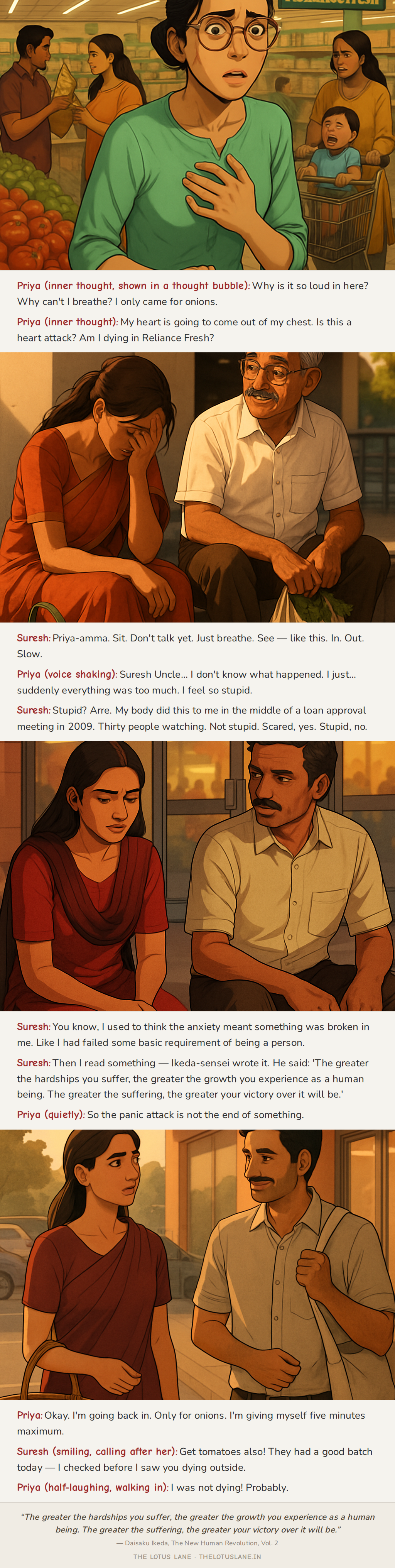
What makes it worse, of course, is the guilt. You lie there and you don't just feel bad - you feel bad about feeling bad. You start cataloguing everything you should be doing. The list gets longer. The weight gets heavier. The ceiling gets more interesting. This is the trap, and almost everyone in the fog falls into it.
What Your Body Is Actually Doing
Here's something worth knowing: when you can't get out of bed, your body is not betraying you. It's protecting you. Or trying to. The nervous system, when overwhelmed, does something very logical - it slows everything down. It's the biological equivalent of a circuit breaker. Too much current running through the wires, so everything shuts off to prevent a fire.
The problem is that modern life doesn't leave much room for circuit breakers. There's no cultural script for "I need to lie still for a while because my system is overloaded." So we lie there feeling ashamed instead of feeling what we actually are: exhausted, overloaded, and in need of something gentler than what we've been giving ourselves.
One collection of philosophical writings puts it plainly: "Health is not simply the absence of illness. It is a dynamic state of vitality in which we can take on any challenge." Read that again. Health isn't just the absence of something bad - it's the presence of something good. Which means on the days you can't get up, you're not just lacking health. You're lacking vitality. And vitality is something that can be rebuilt, slowly, carefully, like tending a fire that's nearly gone out.
What Actually Helps (Honestly)
Let's talk about the practical stuff, because philosophy without practicality is just decoration.
Start smaller than you think makes sense. Not "get up and exercise." Not "make a healthy breakfast." Just: move one part of your body intentionally. Wiggle your fingers. Roll onto your side. Put one foot on the floor - not both, just one. The goal isn't to trick yourself into being productive. The goal is to remind your nervous system that you have agency, that you can make something happen, even something tiny. Tiny counts. Tiny is real.
Let something in. Light, if you can manage it. Not a blazing overhead light - just pull the curtain a few inches. Or open a window slightly. The body responds to sensory signals, and a small change in environment can shift something subtle in how you feel. It won't save you, but it might edge you slightly toward the day.
Drink water before anything else. Not coffee, not your phone - water. Dehydration genuinely makes depression and anxiety worse. This sounds almost offensively simple for how bad you feel, and yet it's true. The body needs the basics before it can manage anything more complex.
Tell someone, even one person. Not a performance of suffering. Not a long explanation. Just: "I'm having a really hard time today." That's it. You don't have to justify it or contextualize it. There's a line from an old philosophical letter that has stayed with me: "A single warm word can give someone the courage to go on living. Never underestimate the power of your compassion." That letter was written to encourage people to reach out to those who were suffering - but it works in reverse too. Letting someone reach you, letting their warmth in, requires a kind of courage. And it matters more than you think.
Don't aim for the whole day. The thought of an entire day can be paralyzing when you're in the fog. So don't think about the day. Think about the next thirty minutes. What would make the next thirty minutes survivable? Maybe it's staying in bed but listening to something that comforts you. Maybe it's texting someone. Maybe it's eating something, anything, even crackers. The day is not the unit of measurement right now. Right now, thirty minutes is enough of a task.
The Shame Is Lying to You
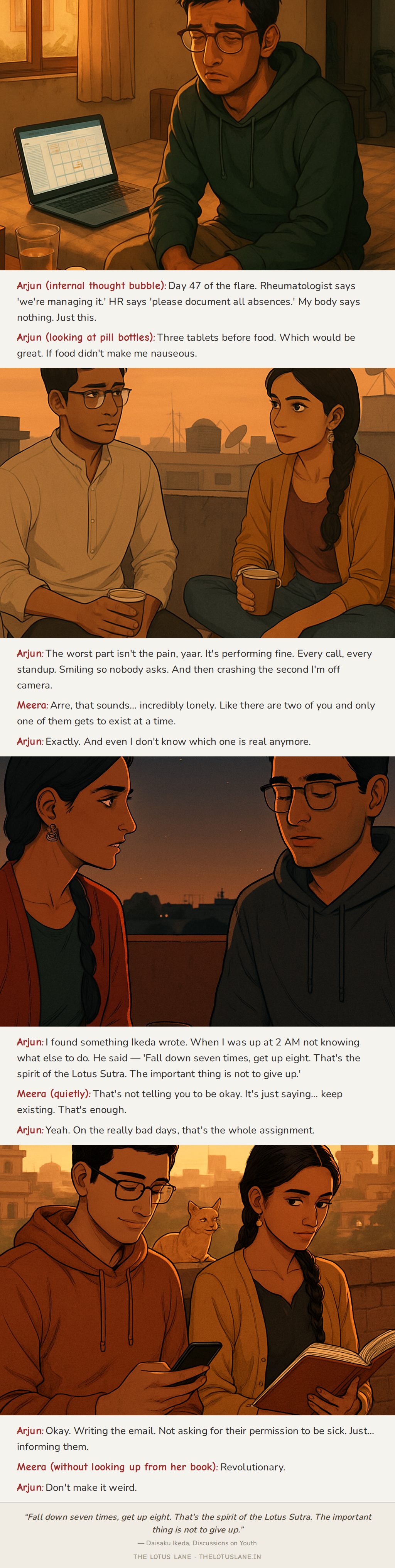
One of the cruelest things about not being able to get out of bed is what the mind does while you're lying there. It starts making arguments. It tells you that other people manage. That you have no real reason to feel this way. That if you were stronger, or better, or less of a mess, you'd be up by now.
The shame is lying to you.
Struggling is not evidence of failure. It is evidence of being human. There's a distinction that gets lost in conversations about mental health, and it's this: the strength required to simply survive a hard day - to stay in it, to not disappear entirely - is real strength. It just doesn't look like the kind of strength our culture celebrates.
One piece of ancient writing describes it this way: "True compassion is not soft or weak. It takes great strength to truly care about others, to shoulder their pain." The same applies to yourself. Caring for yourself on the days when you're in pieces - not abandoning yourself, not punishing yourself, but genuinely tending to yourself - takes more strength than most people realize. It is not weakness to be struggling. It is not weakness to need help. The people who insist otherwise have usually never been as deep in the fog as you are right now.
If It's Been a Long Time
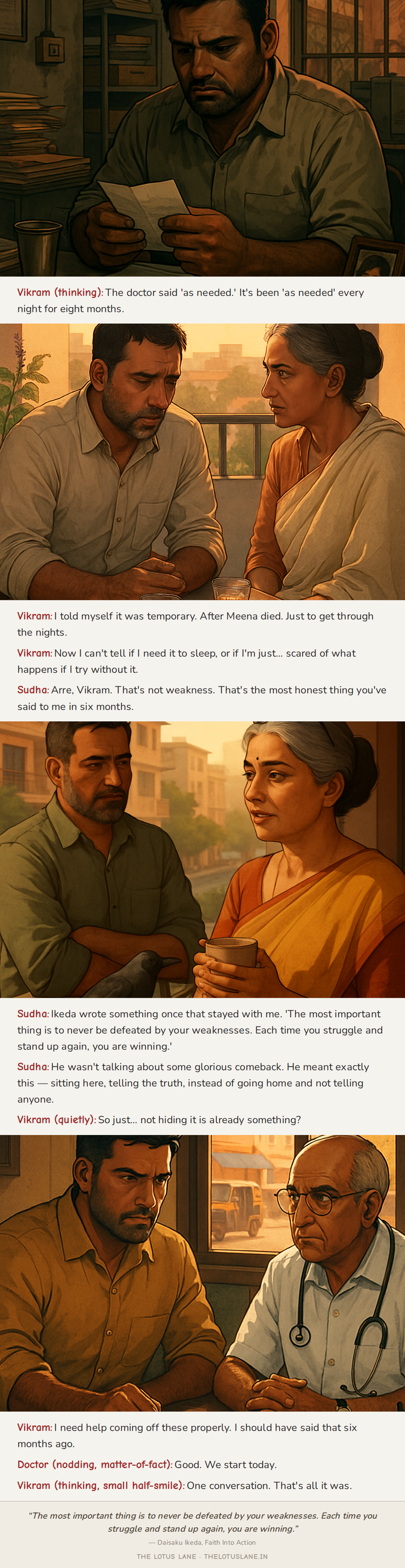
If this is one bad night, one bad week - the suggestions above may be enough to carry you through. But if you've been in the fog for months, if the bed has become a place you can't leave rather than a place you go to rest, please hear this: that is beyond what philosophy or willpower or morning routines can fix alone.
That is a sign that your brain chemistry, or your nervous system, or both, need professional support. A doctor. A therapist. Someone trained to help. Seeking that help is not giving up. It is, in fact, one of the bravest and most practical things a person in your position can do. There is no wisdom - ancient or modern - that says suffering in silence is noble. The opposite is true. Asking for help is how things change.
One More Thing
If you found this article at 2am, staring at your phone in the dark, unable to sleep and unable to figure out how to get through tomorrow - I want you to know that the fact that you're looking for something, anything, that might help, matters. That impulse toward your own survival is worth trusting.
You don't have to be okay tonight. You don't have to have this figured out. You just have to get to morning, and then you can take it from there. One small thing at a time. One thirty-minute window at a time. That is enough. You are enough, even on the days - especially on the days - when it really doesn't feel like it.
The fog is real. You're not making it up, and you're not weak for being in it. And it does, eventually, lift. Not because of anything magical, but because you kept going, even when going meant lying very still and just breathing until morning came.
That counts. It always counted.