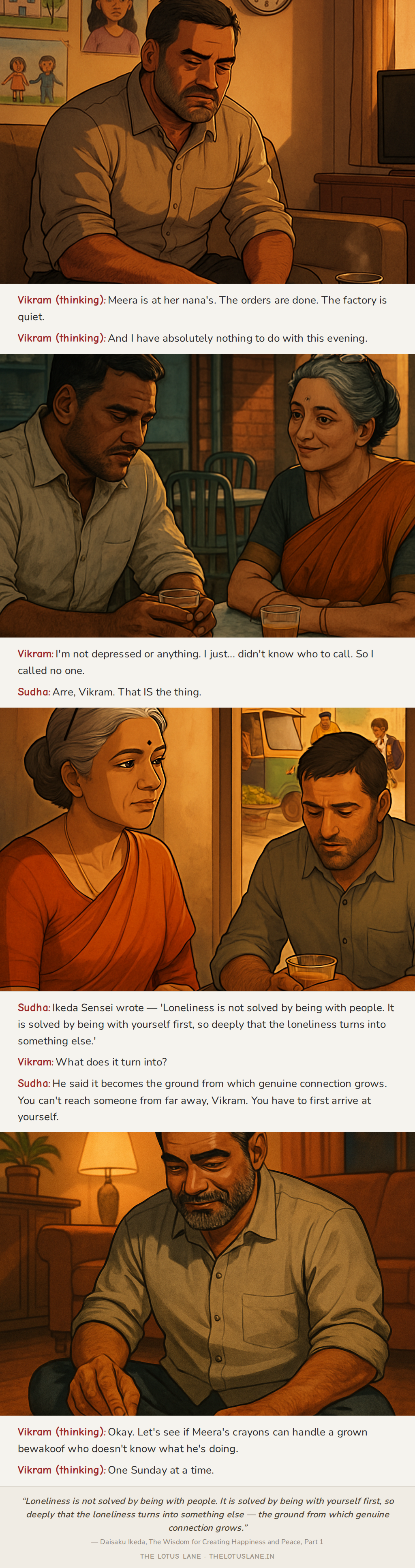
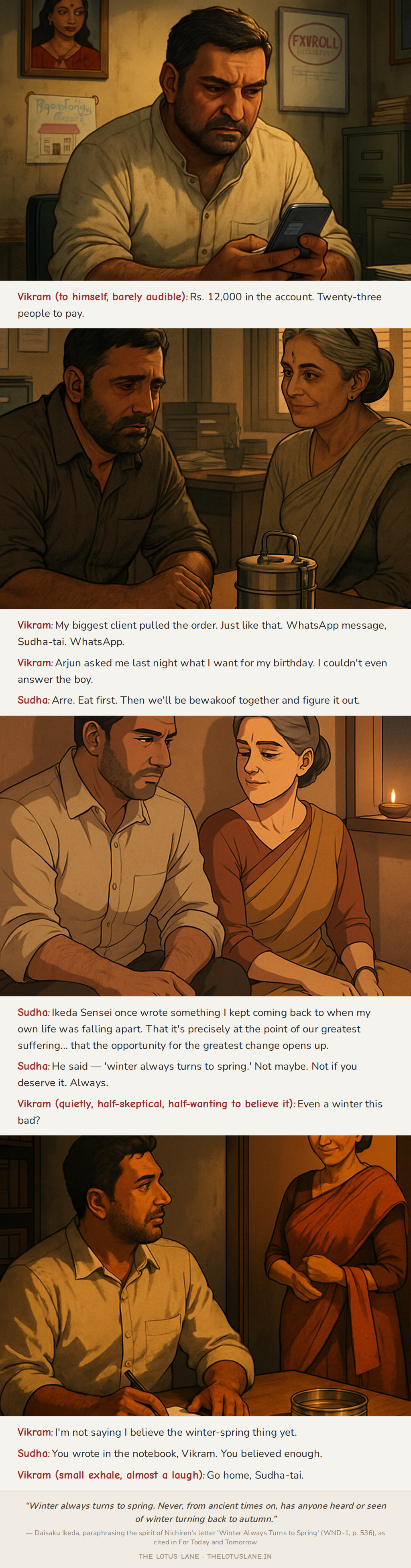
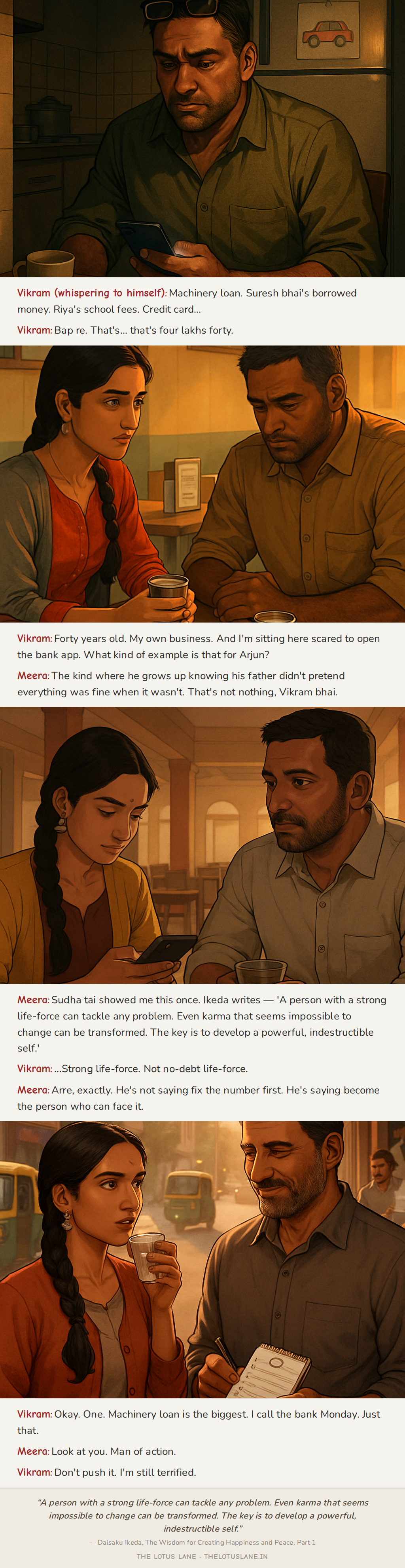
You know that feeling when you wake up at 3am and your first conscious thought is a number? Not a pleasant number. A number that sits on your chest like something heavy - an EMI you're not sure you can make, a credit card bill you've been avoiding opening, a loan that somehow keeps growing no matter what you do. You lie there in the dark, running calculations that never quite add up, and the silence of the house makes it all feel louder somehow.
If that's you right now, you're not alone. Not even close.
Financial anxiety is one of the most privately suffered things a person can go through. We talk about it less than almost any other kind of pain - less than relationship problems, less than health scares - because money carries this strange shame with it. As if struggling financially means you did something wrong. As if the people around you - your parents, your partner, your colleagues - are somehow managing just fine, and you're the only one drowning.
You're not. The shame is lying to you.
What Financial Anxiety Actually Does to You
Before we talk about anything else, let's just name what this actually feels like in your body, because it matters that we're honest about it.
Financial anxiety isn't just "stress about money." It's a low-grade dread that follows you everywhere. It's checking your bank balance compulsively, then feeling worse after. It's a tight chest during a meal out with friends when the bill comes. It's that flash of panic when your phone rings from an unknown number. It's the way you sometimes can't be present with your children or your partner because some part of your brain is always running the numbers in the background.
It affects your sleep. Your digestion. Your ability to concentrate. Your relationship with the people you love most, because fear has a way of making us short-tempered and distant when we most need to be close.
And here's the thing nobody tells you: the anxiety itself often makes the financial situation worse. When we're in a state of panic, we make poorer decisions. We avoid opening letters. We procrastinate on calls we need to make. We impulse-spend to get a moment's relief. The fear becomes its own trap.
The Fear Is Real. You Still Have to Move.
There's a line from a collection of philosophical writings that I want to share with you, because it's one of the most honest things I've ever read about fear:
"Courage is not the absence of fear. Courage is feeling fear, recognizing fear, and still taking action."
Nobody is asking you to not be afraid. The fear makes complete sense. If you have debt pressing down on you, if you're not sure how you'll provide for your family next month, if you've made financial mistakes that have compounded into a situation that feels impossible - being afraid is the rational response.
But there's a difference between fear that protects you and fear that paralyzes you. The first kind makes you careful. The second kind keeps you stuck in bed at 3am, running the same calculations over and over, arriving at the same dread, taking no action, and waking up tomorrow to do it all again.
Courage, in this context, doesn't mean being bold or taking big dramatic leaps. Sometimes it just means opening the letter. Making the call. Writing down the actual numbers - all of them, even the scary ones - because the thing you can see clearly is always less monstrous than the thing your anxious mind has been constructing in the dark.
Some Practical Ground to Stand On
Philosophy is only useful if it helps you do something different today. So let's get specific.
Write the actual numbers down. All of them. What you owe, to whom, at what interest rate, what the minimum payment is. This is terrifying for a reason - it makes the problem real. But it also makes it finite. Right now, in your head, the debt is a shapeless monster. On paper, it's a set of numbers that can be worked with. You cannot solve a problem you won't look at directly.
Separate urgent from important. Not everything on your financial worry list needs to be solved this week. Some things are genuinely urgent - an EMI due in three days, a utility about to be cut. Others are real problems but not immediate ones. When everything feels equally catastrophic, we can't prioritize. Make a simple list: what needs attention in the next seven days, and what can wait. Deal with only the seven-day list first.
Call before you're in crisis. If you know an EMI or payment is going to be difficult this month, call the lender before you miss it - not after. Banks and lenders deal with this more than you think. Some have restructuring options. Some will offer a payment holiday. You have far more power before a default than after one. Most people wait until the situation has deteriorated because calling feels like admitting failure. It's not. It's being smart.
Find one person to talk to honestly. Not to borrow money from. Just to say the truth out loud to. The secrecy of financial struggle is part of what makes it so heavy. Shame lives in silence. Even one conversation with a trusted person - a sibling, an old friend, a partner you've been hiding things from - can take a surprising amount of weight off.
Protect your sleep, even just a little. This sounds almost insulting when you're worried about rent. But sleep deprivation genuinely worsens anxiety and impairs the decision-making you need right now. If you're lying awake doing mental calculations, keep a notepad by your bed. Write down whatever your mind is spinning on. Then tell yourself: the paper is holding it. You don't need to hold it until morning. This sounds simple. It works more than it should.
When It Feels Like Too Much to Carry
There are moments in financial hardship that go beyond stress into something darker - a feeling that you've failed the people who depend on you, that there's no way out, that the situation is simply too broken to fix. If you've felt that, please hear this clearly: that feeling is the anxiety speaking, not the truth.
Some of the most capable, determined, decent people alive have been exactly where you are. Have had their accounts go to zero. Have had to ask for help. Have had to rebuild from genuinely broken situations. The rebuilding is not quick or easy or painless. But it happens. It happens more often than the people inside the crisis ever believe it will.
There's an old idea - simple, almost stubborn in its simplicity - that I find genuinely useful here: fall down seven times, stand up eight. Not because standing up is easy. Not because the fall didn't hurt. But because getting up, even slowly, even imperfectly, is the only thing that eventually changes anything.
And this part matters: one person steadying themselves has a reach further than they realize. The way you handle this - with whatever honesty and effort you can manage - affects your household, your children if you have them, the people watching you without your knowledge. Your stability becomes their steadiness. One person choosing not to be destroyed by their circumstances is never just about that one person.
What Peace With Money Actually Looks Like
Peace with money, especially when you don't have enough of it, is not a feeling of contentment or gratitude or acceptance. That's not realistic, and pretending it is would be insulting to what you're actually going through.
Real peace - the functional, usable kind - looks more like this: knowing what the situation actually is, having some kind of plan even if it's imperfect, having told the truth to at least one person, and having decided that you will keep going. Not because it's easy. Not because you're sure it will work. But because the alternative - staying frozen, staying silent, staying in the dark with the anxiety - isn't living either.
As another philosophical teaching puts it: "The last five minutes of endurance - that is what decides victory or defeat. Never give up in the crucial moment." You may be in your last five minutes right now. You may feel like you've already been going for longer than you can stand. But the moment you're in - this exact one - is still moveable. You are still here. That means something.
A Last Word, From One Human to Another
Whoever you are, whatever the number is that woke you up tonight - I hope this helped, even a little. Not because it solved anything. Articles don't solve financial problems. But because sometimes what you need at 3am isn't a solution. It's just to feel a little less alone in it, and a little more sure that you can make it to morning.
You can. Make it to morning. Then open one letter. Make one call. Write one number down. That's enough for one day.
The rest can follow.