You know that feeling when it's late at night, the house is quiet, and you're lying there staring at the ceiling - not because you're tired, but because something in your life has just cracked open? Maybe it was a divorce that finally went through. Maybe you got let go from a job you'd had for eleven years. Maybe nothing dramatic happened at all - it's just a slow, creeping sense that the life you're living doesn't fit anymore, like wearing someone else's shoes. And now you're here, typing something into a search bar at 2am because you don't know what else to do.
That moment - right there - is actually important. Not because it's comfortable. It isn't. But because the fact that you're asking the question at all means something in you still believes an answer exists.
Starting over is one of the most frightening things a human being can face. And it is also, quietly, one of the most human things we ever do.
The Part Nobody Tells You
Here's what the motivational posters and the weekend wellness retreats leave out: starting over is not usually a triumphant leap. It is, more often, a terrified shuffle. One foot in front of the other while your chest feels tight and your brain is screaming that it's too late, that you're too old, that you've made too many mistakes, that everyone else has figured this out except you.
None of that is true. But knowing it isn't true doesn't make it stop feeling true at 2am.
The question isn't whether starting over is hard. It is. The question is whether it's possible - and whether it's possible for you, specifically, at whatever age you are, with whatever mess you're currently in.
The answer, even if you can't feel it right now, is yes.
Age Is Not the Problem You Think It Is
One of the cruelest lies our culture tells us is that there's a window for starting over, and if you've missed it, you're out of luck. That real change belongs to the young, the unencumbered, the people without mortgage payments and bad knees and a complicated history.
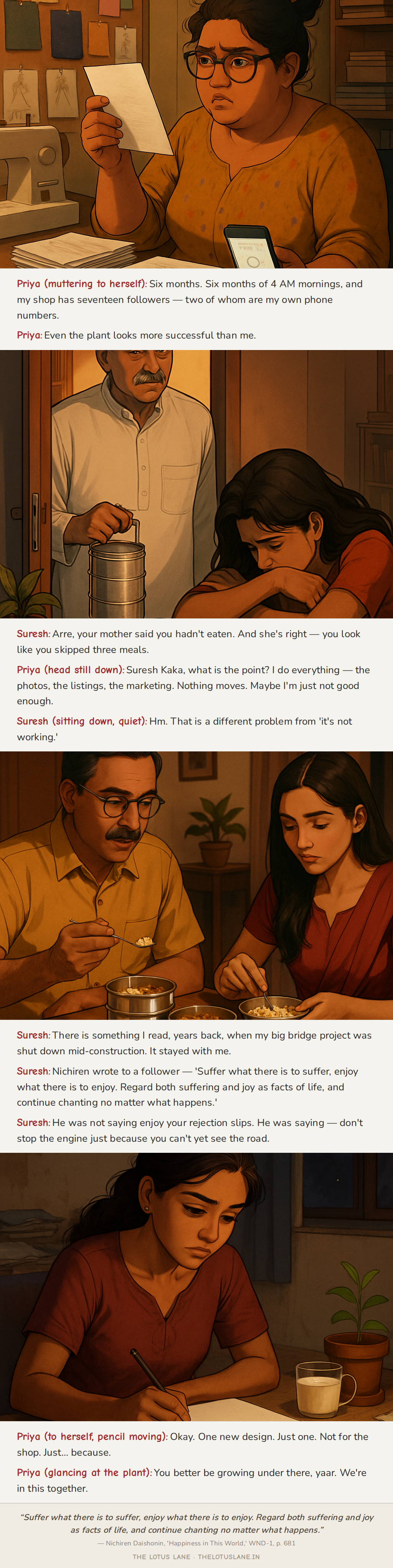
But history doesn't actually support that story. The philosopher and teacher Daisaku Ikeda - someone who spent decades writing and teaching about what it means to live a fully human life - put it this way: "Human revolution is not something special or out of the ordinary. It is the process of transforming our lives, one challenge at a time."
One challenge at a time. Not all at once. Not in some blinding moment of clarity where everything reorganizes itself. One challenge at a time - which means right now, in your current circumstances, with whatever you have available to you, something can shift.
That's not a platitude. That's how change actually works.
What Starting Over Actually Looks Like
People imagine starting over as a clean slate. Wipe everything away, begin fresh, new city, new person. And sometimes it does look like that. But more often, starting over happens inside the same life you already have. Same apartment. Same city. Same body with the same aches. The difference is something internal - a decision, however small, to stop living from the same script.
So what does that look like practically?
First: be honest about what actually needs to change. Not what you think should change, or what other people have told you to change - but what, in your gut, feels wrong. Grab a piece of paper. Write down three things about your current life that you can't keep pretending are fine. Don't perform it. Don't write what sounds reasonable. Write what's actually true. This isn't for anyone else to see. This is just you getting clear.
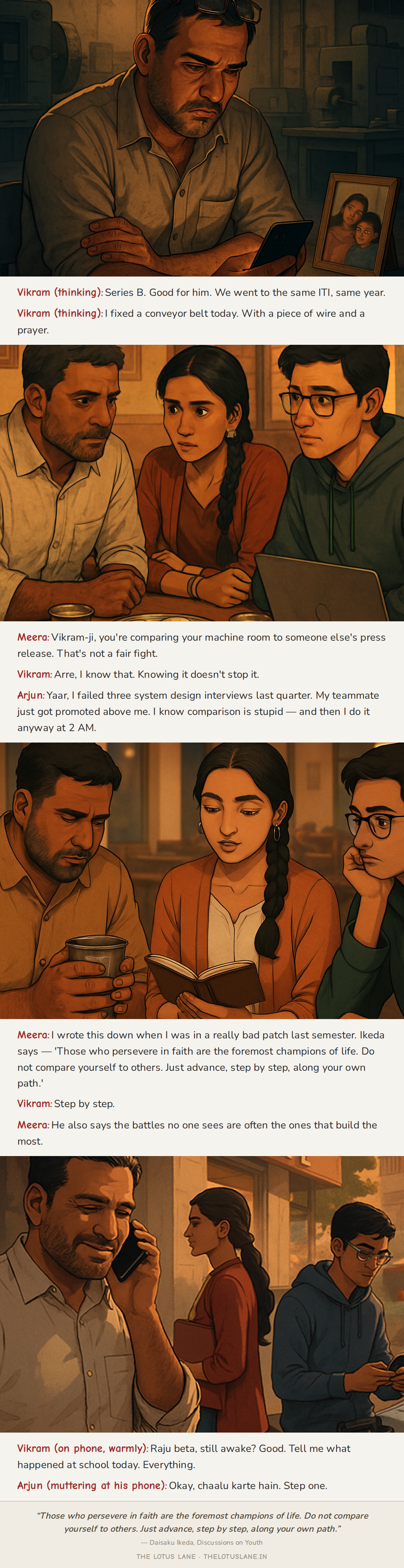
Second: separate what you can control from what you can't. One of the most exhausting parts of a life that needs resetting is the tangle of things you're trying to fix simultaneously. Some of those things are in your hands. Others - what your ex thinks of you, whether the economy recovers, what your family says at dinner - are not. The practice of starting over requires, ruthlessly and repeatedly, returning your attention to the things you can actually act on.
Third: do one small thing today. Not a plan. Not a vision board. One small, concrete action that moves you, even slightly, in a direction that feels true. Make the phone call you've been avoiding. Delete the app that's eating your hours. Walk around the block. Tell one person one true thing. Small actions, repeated, become a different life. This is not inspirational talk - this is how neural pathways actually change.
The Unexpected Role of Gratitude
This part might make you roll your eyes. Stick with it for a moment.
When your life is falling apart or has fallen apart, gratitude feels like an insult. What is there to be grateful for? The bills? The loneliness? The sense that you wasted years on something that didn't work?
But there's a distinction worth making between gratitude as a performance - forcing yourself to feel thankful when you're not - and gratitude as a practice of noticing what's still intact.
One of the old philosophical texts we draw from at The Lotus Lane puts it with striking directness: "Those who always have a sense of appreciation and gratitude never reach an impasse in life." That's not saying your problems disappear. It's saying that the person who can find even one thing that's real and good - even in the wreckage - retains access to forward momentum. They don't get stuck.
Try this, practically: at the end of today, before you sleep, write down three things that were okay. Not amazing. Not proof that your life is blessed. Just okay. The coffee was hot. Your legs still work. You found this article. Whatever is true. Do this for ten days straight and notice what happens to the way you move through your days.
You Are Not Starting From Zero
Here is something that starting-over culture often gets dangerously wrong: it treats your past as something to escape rather than something you bring with you.
Every relationship you've been in has taught you something about yourself - even the ones that ended badly, especially those. Every job, every failure, every version of yourself you've had to leave behind has left you with something. Scar tissue is still tissue. It holds.
You are not starting from zero. You are starting from experience. From hard-earned self-knowledge. From a clearer sense of what you don't want, which - and people underestimate this - is genuinely valuable information about what you do want.
This is what makes starting over at forty or fifty or sixty different from starting over at twenty, but not worse. You know more. You've been wrong before and survived it. You have less time for nonsense, which means you're more likely to spend your energy on things that actually matter.
The Bigger Picture (Which You Don't Have to Believe, But Might Find Useful)
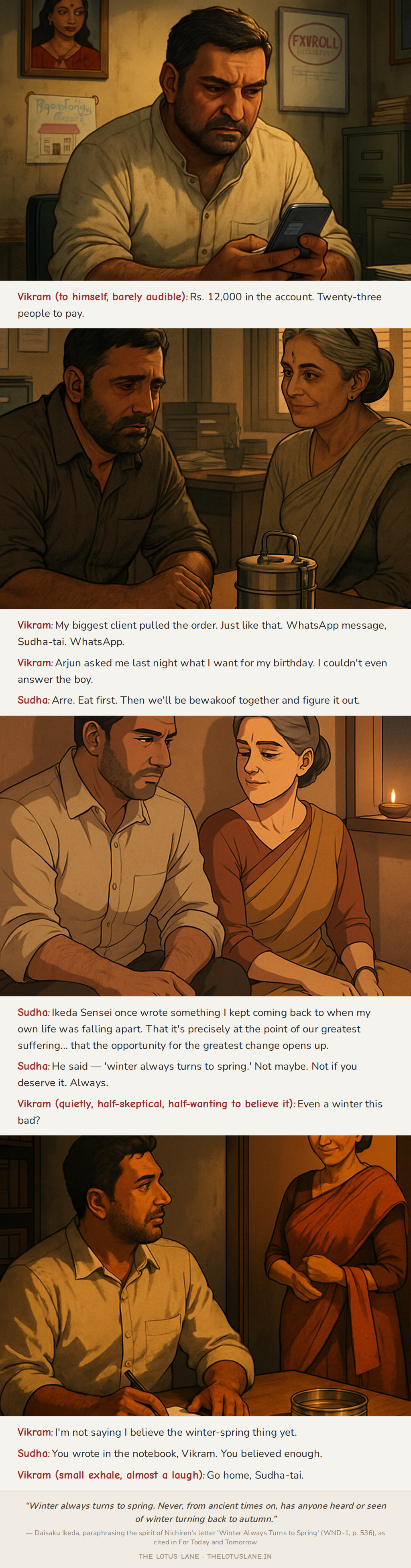
There's a line that has stayed with us, from a book about what it means to change your own life: "A great human revolution in just a single individual will help achieve a change in the destiny of a nation and, further, will enable a change in the destiny of all humankind."
Now, that might sound enormous and abstract at 2am when you're just trying to figure out how to get through next week. But here's why we include it: because sometimes, when we're in the middle of a personal crisis, it helps to zoom out. Not to minimize what you're going through - but to remember that the work of changing your own life is not a small or selfish act. The people around you are affected by who you become. Your children, your friends, the strangers you'll interact with, the work you'll eventually do from a different place in yourself. Your reset matters beyond you.
You are not just fixing a problem. You are - slowly, messily, imperfectly - becoming someone.
One Last Thing
Starting over is not a single moment. It's a series of mornings where you choose, again, to move in a direction that's a little more honest and a little more alive than the day before. Some of those mornings you'll feel it. Some of those mornings you'll feel nothing except tired, and you'll do it anyway.
The fact that you're awake right now, asking this question, is not a sign that you've lost. It's a sign that something in you refuses to stop. That part of you - the part that typed this search at 2am - is not broken. It's the most intact thing about you.
You don't need to have it figured out tonight. You just need to get to tomorrow. And then tomorrow, you do it again.
We're glad you found this. Whatever comes next - you can do it.