You know that feeling when you're lying awake at 2am, staring at the ceiling, and your mind keeps replaying it? The thing they said. The thing they did. You've gone over it a hundred times. You know, intellectually, that you're supposed to "let go." People have probably told you that. Maybe you've told yourself that. But knowing you should forgive someone and actually being able to do it - those are two completely different things, and the gap between them can feel enormous.
So let's not pretend this is easy. It isn't. And if someone tells you it is, they probably haven't been hurt the way you've been hurt.
What we can do, right now, is be honest about what forgiveness actually is - because most of us have it completely wrong - and then talk about what you can realistically do when you're in pain and someone else caused it.
First, Let's Clear Up What Forgiveness Is Not
Forgiveness is not saying what happened was okay. It's not reconciling with the person. It's not forgetting. It's not pretending the wound doesn't exist. And it is absolutely not something you owe the person who hurt you.
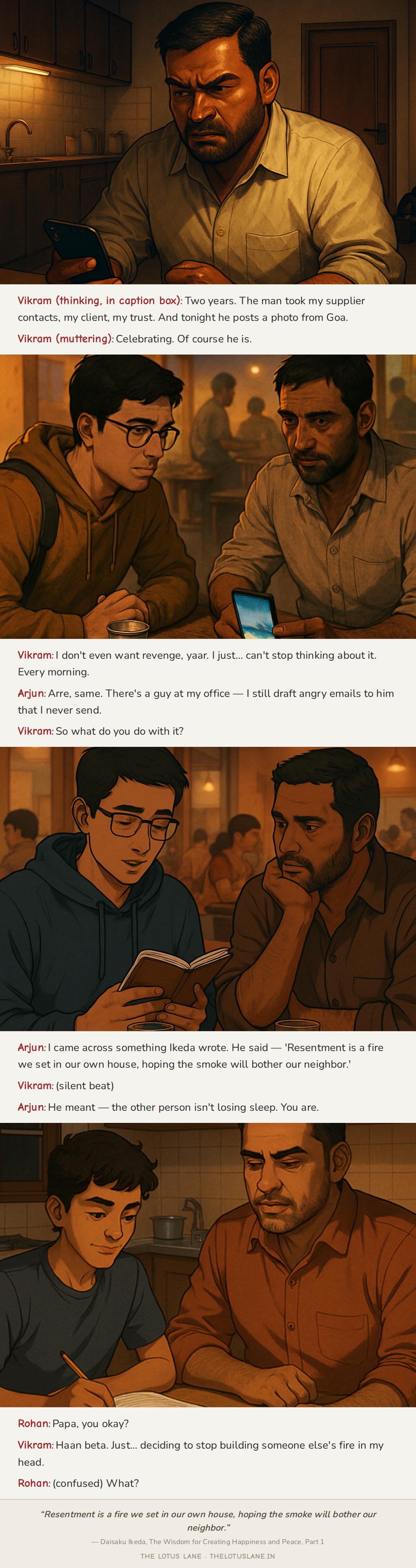
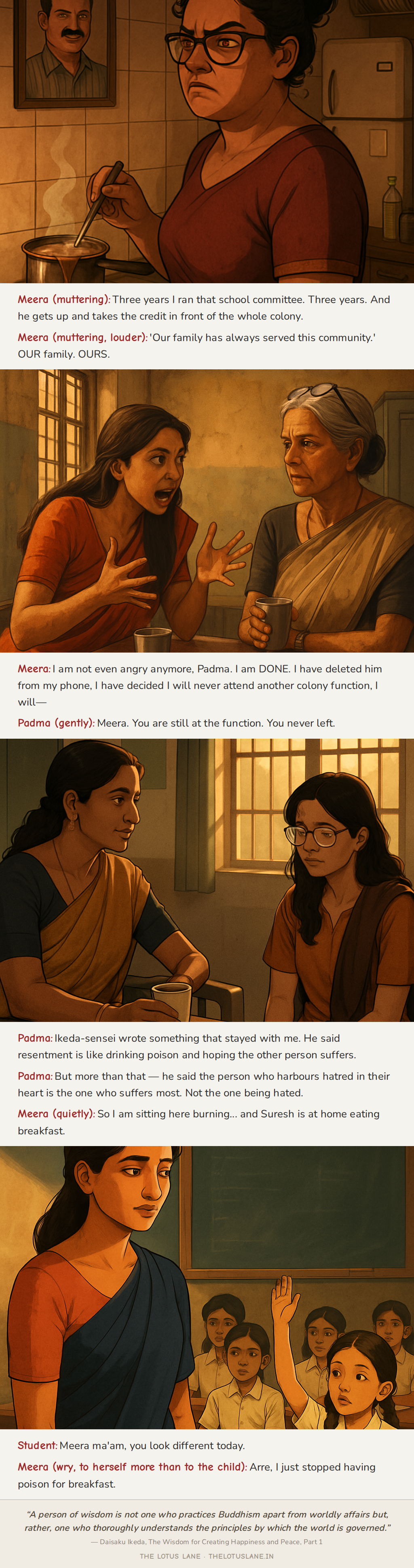
Forgiveness is something you do for yourself. That sounds like something you'd find on a motivational poster, so let me be more specific. When you carry a grudge - when you replay the hurt, nurse the anger, build the case against someone in your head - you are the one suffering. They've moved on. They're probably sleeping fine. You're the one at 2am. The resentment you're holding isn't punishing them. It's punishing you.
That's not a reason to feel guilty about your anger. The anger is real and it's telling you something important: that you were wronged, that you have limits, that you matter. Don't rush past that. But at some point, you have to ask yourself - how long do I want to keep paying this price?
What a 13th-Century Philosopher Understood About This
There's a collection of letters written by a Japanese philosopher in the 1200s - a man who spent his life thinking about how ordinary people could deal with suffering, betrayal, and loss. Not monks. Not scholars. Ordinary people with families and enemies and broken relationships. What he wrote still holds up, maybe because human pain hasn't changed much in eight hundred years.
One thing he was very clear about: compassion is not soft. It is not the same as being a pushover or feeling sorry for someone from a safe distance. As he put it, "True compassion is not soft or weak. It takes great strength to truly care about others, to shoulder their pain."
That changes the framing, doesn't it? Forgiveness isn't weakness. It isn't giving up. It takes more strength to sit with someone's humanity - even someone who hurt you - than to simply write them off. And it takes more strength to release anger than to hold onto it, because anger, however painful, is at least familiar. It gives you something to do with your hands.
The Problem With "Just Let It Go"
Here's what nobody tells you: you can't think your way into forgiveness. You can't decide to stop feeling hurt and then feel better. The mind doesn't work like that. Feelings aren't light switches.
What you can do is change your relationship with the story you're telling.
Right now, in your head, there's a version of events. You're in it. They're in it. You know who the villain is. That story is real - the pain is real - but it's also incomplete. The same philosopher wrote something that's worth sitting with: "Wisdom is the ability to see things as they really are, not as we wish them to be. And then to act accordingly."
Seeing things as they really are is hard. It means looking at the person who hurt you as a full human being - someone who also has fears, wounds, blind spots, things they regret, things they never dealt with. That doesn't excuse what they did. But it does make them something other than a cartoon villain, and it's much harder to stay consumed by someone once you see them clearly.
This isn't about excusing them. It's about releasing yourself from the story where they have all the power.
Some Actual Things You Can Do Tonight
Philosophy is useful, but you also need something to do with your hands. Here are a few things that genuinely help - not because they're magic, but because they give your nervous system something to work with.
Write it out, uncensored. Not to send. Not to share. Just for you. Write down exactly what happened, exactly how it made you feel, exactly what you wish you could say to them. Don't edit yourself. Don't be fair. Just get it out of your chest and onto the page. You'll often find that the act of writing it down takes some of its power away. The thought that loops endlessly in your head becomes, on paper, just a thought.
Separate the person from the act. This is harder than it sounds, but try it. The thing they did - the betrayal, the cruelty, the carelessness - that happened. It was real. But is it the complete truth of who they are? Most people who hurt us are not evil. They are scared, or selfish, or hurting themselves, or just not thinking about us at all. None of that makes it okay. But it changes the texture of what happened.
Ask yourself what you actually need. Sometimes what we call "forgiveness work" is really grief work. We're not just angry - we're heartbroken. We lost something. Maybe trust. Maybe a friendship. Maybe a version of ourselves that believed certain people were safe. Grief needs to be named before it can move. What did you actually lose here?
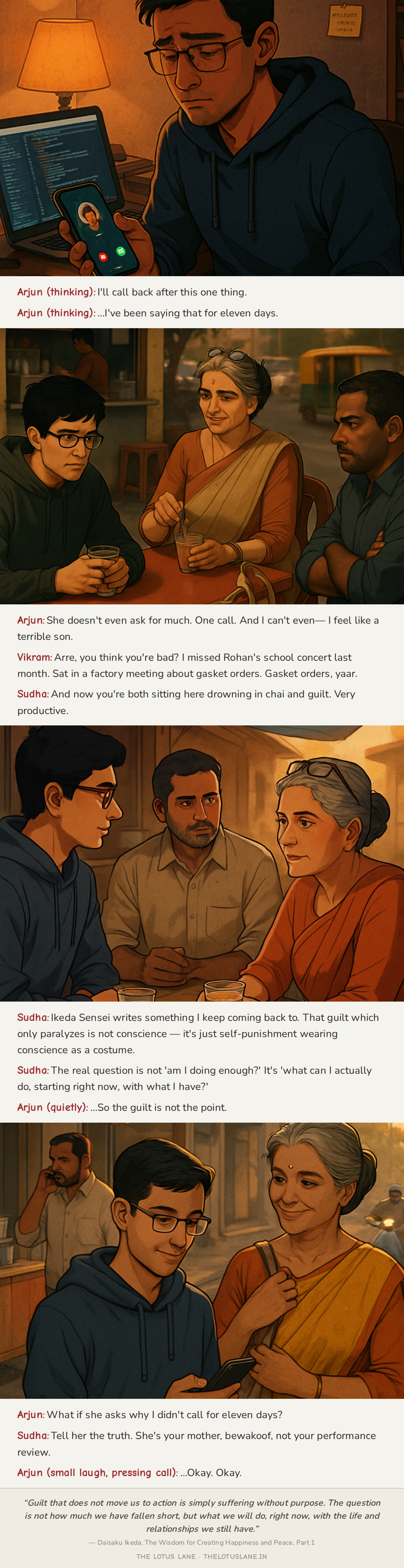
Stop waiting for an apology. This one is brutal, but necessary. If you've tied your ability to heal to whether or not this person apologizes or acknowledges what they did, you've handed them your healing. They may never apologize. They may not even know they hurt you. You cannot wait for their remorse before you allow yourself to be okay. That's too high a price.
Talk to someone. Not to vent endlessly - that can actually reinforce the hurt - but to be witnessed by someone who cares about you. There's something about being heard, really heard, that loosens the grip of pain. That same philosopher wrote something simple that I keep coming back to: "A single warm word can give someone the courage to go on living. Never underestimate the power of your compassion." You deserve to receive that kind of compassion too. Reach out to someone. Let them sit with you in this.
What Forgiveness Actually Feels Like When It Happens
It's rarely a moment. It's rarely a decision you make once and then it's done. It's more like - you notice one day that you thought about them and it didn't pull you under. Or you hear their name and feel tired instead of furious. Or you tell the story to someone and realize you're no longer in it the same way.
That's it. That's forgiveness. Not a grand gesture. Not a conversation where everything gets resolved. Just the slow, quiet loosening of something that had its hooks in you.
It might take a week. It might take years. Both are okay. There's no timeline for this, no matter what anyone tells you.
One Last Thing
If you're reading this at 2am because you're hurting, I want you to know that the fact that you're searching for a way through this - instead of just deciding to be bitter forever - already says something about who you are. You want to be free of this. That's the beginning of everything.
You don't have to like the person who hurt you. You don't have to let them back into your life. You don't have to perform peace you don't feel. You just have to find a way to put down something heavy enough that it's breaking you under the weight of carrying it.
That's all forgiveness is. Putting down something heavy. Not for them. For you.
You can do that. Maybe not tonight. But you can do it.